Posterolateral Corner (PLC) Reconstruction in Reading — Complex Knee Surgery
The posterolateral corner (PLC) of the knee is a group of ligaments and tendons that control outward rotation and prevent the knee from opening up on its outer side. When damaged — often in conjunction with other ligament injuries such as the ACL or PCL — it can cause significant instability, pain, and difficulty trusting the knee.
Mr Sam Nahas, consultant knee surgeon at Circle Reading Hospital, performs PLC reconstruction using modern anatomical techniques, including the Larson procedure, to restore stability and protect other reconstructed ligaments.
Patients benefit from self-pay consultations within a week, rapid MRI, and personalised rehabilitation protocols for complex ligament injuries.
Understanding the PLC
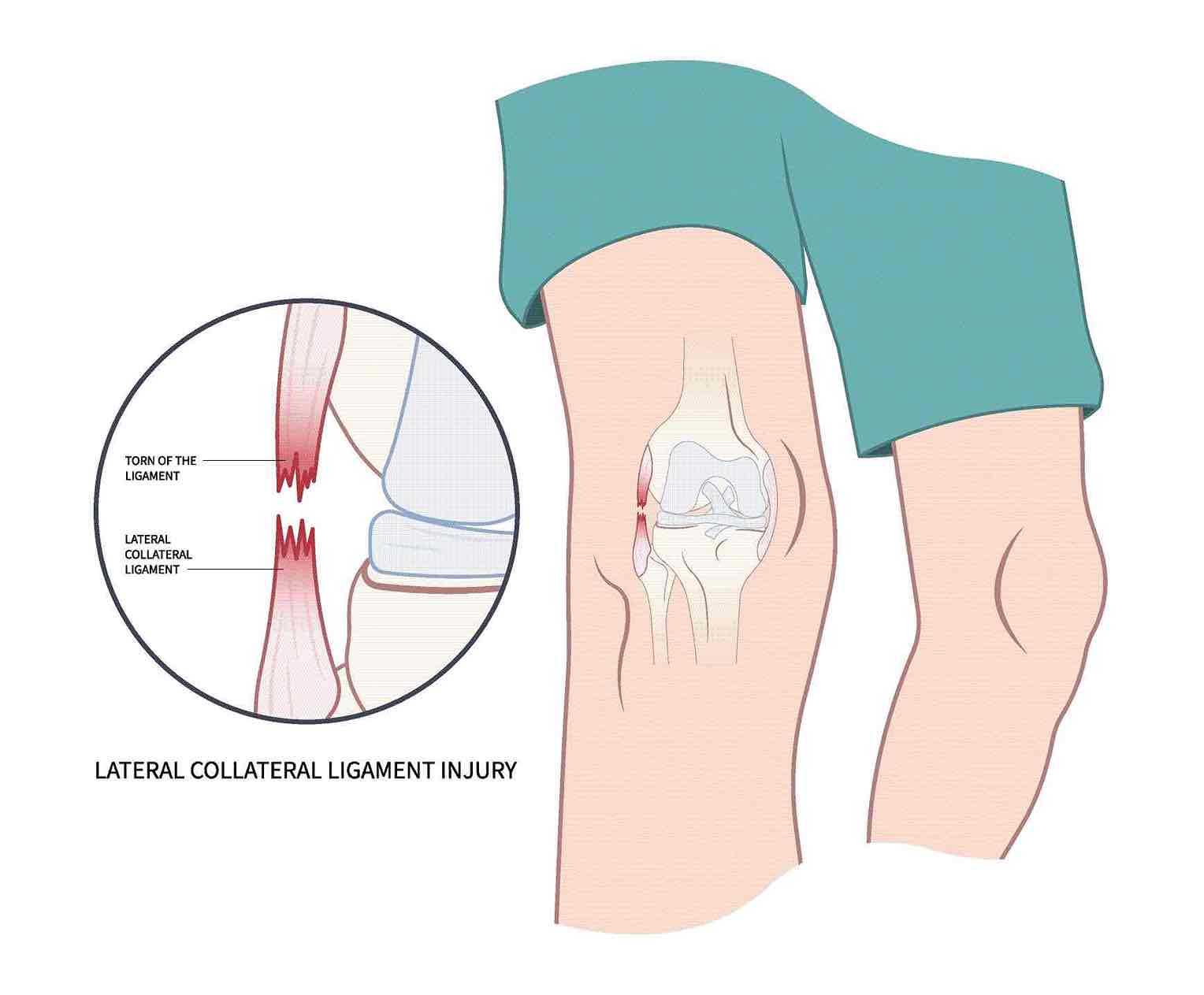
The posterolateral corner consists of several key structures:
Fibular collateral ligament (LCL)
Popliteus tendon
Popliteofibular ligament
These work together to stabilise the outer side of the knee during twisting, turning, or impact.
When injured, patients often describe a sense of the knee "giving way" during pivoting or uneven ground, particularly after an ACL or PCL tear.
Common causes:
Sports injuries involving hyperextension or twisting
Direct trauma (e.g. tackle from inside of the knee)
Knee dislocation or multi-ligament injury
Typical symptoms:
Outer knee pain and swelling
Feeling of instability, especially during direction changes
Difficulty with stairs or uneven surfaces
In combined injuries: failure of previous ACL or PCL grafts due to unrecognised PLC damage
Diagnosis and imaging
Accurate diagnosis requires detailed examination and high-quality imaging.
MRI identifies which structures of the PLC are injured and whether the ACL or PCL are also affected
X-rays help assess bone alignment and rule out avulsion fractures
Patients under Mr Nahas typically receive MRI within a week and a clear plan within a week.
When surgery is needed
Minor PLC sprains can heal with bracing and physiotherapy.
However, complete tears or chronic instability nearly always require surgical reconstruction to restore knee function and protect any ACL or PCL grafts.
Indications for reconstruction include:
Persistent lateral or rotational instability
Combined ACL/PCL injury
Failure of prior ligament surgery due to unrecognised PLC laxity
High-demand or athletic patients requiring full stability
Surgical technique — the Larson procedure
Mr Nahas performs PLC reconstruction using the Larson technique, a proven and widely adopted method.
In lay terms, the Larson procedure uses a tendon graft (typically from the hamstrings) to rebuild the key structures on the outside of the knee.
The graft is looped and anchored through small bone tunnels in the femur (thigh bone) and fibula, recreating the function of both the fibular collateral ligament and the popliteofibular ligament.
This restores outward stability while allowing normal knee motion. The operation is performed under general anaesthetic, typically as a day case or overnight stay at Circle Reading Hospital.
Recovery and rehabilitation
Rehabilitation after PLC reconstruction is gradual and carefully supervised:
Weight bearing: may be restricted depending on the exact nature of the procedure
Range of motion: may be limited initially depending on the exact nature of the procedure
Physiotherapy: begins early to restore muscle strength and control
Return to driving: around 6 weeks, once you can perform an emergency stop safely and are off strong painkillers; this also depends on which leg was operated on and whether you drive a manual (see Driving after knee surgery)
Return to sport: 9–12 months, depending on associated procedures
Each patient follows a recovery pathway designed for safe healing and return to full activity. The recovery pathway is tailored to each individual's lifestyle and sporting goals. Recovery is criteria-based and not actually based on a fixed time. What this means is you are not allowed to progress to the next phase of rehabilitation if your knee or muscles are not ready. Each patient's timeline will differ depending on progress, and results are not guaranteed as per this timeline. These are approximate estimates.
Evidence and outcomes
Posterolateral corner (PLC) reconstruction is a specialist procedure that restores knee stability. Modern evidence shows:
Return to sport: About 75% of patients return to any sport and approximately 59% back to their previous level (D'Ambrosi et al., Indian J Orthop, 2024)
Graft protection: When the PLC is treated at the same time as cruciate ligament surgery, it reduces abnormal stress on the ACL/PCL grafts and helps protect them (Maniar et al., JAAOS, 2024; Cinque et al., Annals of Joint, 2018)
Why choose Mr Sam Nahas
Consultant knee-only surgeon specialising in ligament and complex knee reconstruction
Fellowship-trained expertise in ACL, PCL, MCL, and PLC injuries
Performs Larson PLC reconstruction with modern graft fixation methods
Access to full rehabilitation support and evidence-based recovery protocols
Self-pay consultations within a week and MRI imaging at Circle Reading Hospital
Self-pay and appointments
Self-pay packages are available. No GP referral is required.
Location
Procedures are performed at Circle Reading Hospital, serving patients from Reading, Berkshire, Wokingham, Henley, Oxford, and surrounding areas.